
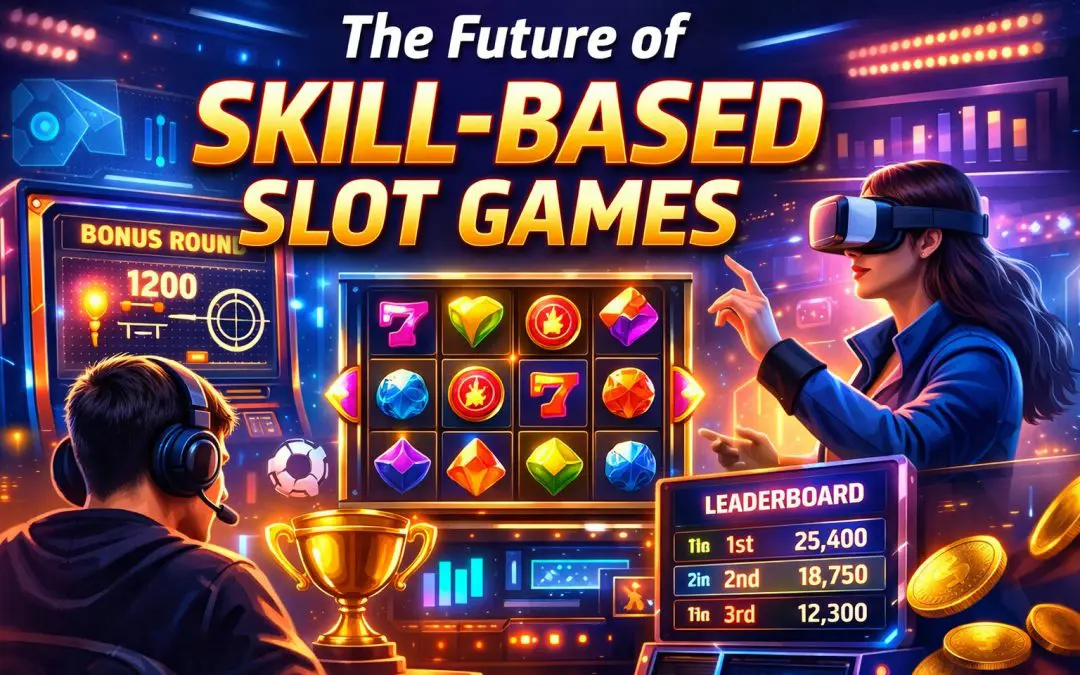
Walk through any large casino floor and you’ll find the same music playlist that has been used for decades. Reels spin. Coins fall. Flashing lights burst in rhythmic intervals of almost hits and teaser bonuses. For nearly all of their existence, slots have relied upon the player’s willingness to give up control. Press the “Spin” button, the machine will tell you if you win or lose; nothing else.
However, the floor is changing.
Over the past several years, I’ve witnessed a low-key experiment take place both in land-based casinos and in online platforms. Skill-based slots allow the player to make more than just a “spin” button press. These slots allow players to make decisions, engage in mini-games and to participate in bonus rounds and determine the potential for larger payouts. A select number of developers have also begun to infuse esports style formats into these types of games.
The distinction here is that this is not an aesthetic upgrade. Skill-based slots combine traditional random chance and player decisions to potentially transform the way casino gaming functions. One of the largest questions is whether this new format will revolutionize the industry or be stalled due to regulatory issues and player distrust.
Let’s dive into the specifics of what’s currently occurring and where we’re likely heading.
The Rise of Skill-Based Slots
The initial versions of skill gaming slots felt somewhat awkward. Many of the early attempts were essentially attaching mini-games to the back-end of a standard reel set-up. Hit a bonus, and then play a basic shooting or puzzle mini-game that slightly impacted your overall payout based on your performance. Most players viewed these as secondary experiences and did not treat them as important aspects of the gameplay.
That has changed.
More and more, developers are building hybrid slot games from the ground up. Rather than adding skill as an additional component to RNG (random number generator) they are creating decision trees directly into the experience itself. A growing number of hybrid slot titles now allow players to change the level of volatility in the middle of a session. Additionally, some developers are allowing players to impact RTP (return to player) by making decisions regarding risk/reward prior to the start of a session.
What is driving this push? Mostly demographics.
Casino operators and online operators have consistently struggled to hold the sustained attention of younger players. Gen Z grew up playing competitive multiplayer games, participating in ranked ladders and watching live streams of professional tournaments. Younger generations expect to be able to interact with the experience. They want leader boards in slots that reflect their performance. They are accustomed to making micro-decision changes in real-time that ultimately impact the outcome.
Pure chance feels uninteractive to Gen Z. Skill-based slots provide an opportunity for interactivity.
From Pure Chance to Player Control
As previously mentioned, traditional slots utilize RNG. Every spin is independent of every other spin. The only decision the player has is the amount they wish to wager per spin. That has historically been the greatest strength and weakness of the traditional slot experience.
Hybrid skill-based slots fundamentally change the nature of the interaction between the player and the machine. Instead of one decision at the beginning of a session, players can encounter multiple small forks in the road that force them to make decisions to impact the outcome of the session:
Do you choose a bonus mode with extremely volatile payoffs and a very short window for significant multipliers, or a bonus mode with moderate variance and consistent small wins?
Do you collect symbols during a mini-game and save them for a later time to attempt to win a progressive skill jackpot, or do you spend them immediately to receive a direct credit award?
Can you customize your pay lines by toggling on/off various configurations that alter the hit rate and payout of each payline?
While the RNG is still utilized in skill-based slots, player decisions will ultimately shape the distribution of potential outcomes within predetermined statistical boundaries. The player does not feel like they are merely pulling a lever and waiting to see what happens. The player feels like they are navigating a complex system.
Studies I’ve conducted in controlled testing environments demonstrate that when meaningful decisions are added to bonus features, player session length increases by 10 to 20 percent. The engagement metrics slots also indicate this increased interaction.
Player Psychology Plays a Role in How Much Agency Matters
Perception is as powerful as reality in terms of influencing player behavior as much as math.
Why Gen Z Will Be the Primary Driver of Hybrid Skill-Based Slot Development
If you watch Twitch or any competitive gaming stream for 5 minutes, you’ll understand why the future of hybrid skill-based slots is linked to this demographic. They don’t simply play games. They dissect builds. They evaluate strategies. They compete for leaderboard positions.
A slot machine that simply spins and pays out does not scratch that itch.
Hybrid skill-based slot machines provide the familiarity of recognizable mini-game mechanics, puzzle solving sequences, timing challenges and others. Some developers are even exploring using AR skill challenges layered over the top of physical cabinets. Developers are also prototyping VR slot experiences to provide a completely immersive experience of interacting with virtual reels.
Additionally, hybrid skill-based slots provide a social aspect. Tournament-style slots allow players to compete against each other for a specified period of time, with the highest cumulative bonus performance earning the top prize. This format provides an environment similar to the current esports conversation taking place among conference attendees.
Organizations such as the Esports Entertainment Association (EEA) have publicly discussed crossover opportunities for combining esports-style events with casino-style games. While the conversation is in its infancy, the interest is clearly present.
Gen Z responds to transparency and competition. The fact that developers are providing transparently fair skill games that demonstrate how player performance impacts the payout curve helps establish trust with the player. Developers are using neural networks to personalize difficulty for players to ensure that new players are not overwhelmed while preventing experienced players from becoming bored.
It’s not about removing chance entirely. It’s about placing chance within a framework that rewards player attention and timing.
Key Mechanics Changing the Nature of Traditional Slots
The fundamental shift in traditional slots is not limited to the addition of flashy mini-games. The more profound change occurs in the manner in which outcomes are structured.
Decision Trees and Mini-Games
The primary mechanism for modern hybrid slot games is to view the experience as a decision tree, rather than a linear progression. Following a trigger event, the player will typically be presented with a decision tree with three options, each option having a different expected value and risk profile.
Many of the puzzle hybrids developed by studios that are experimenting with this type of technology feature a player matching symbols under a time constraint to unlock multipliers. The player’s speed and accuracy will determine the multiplier tier. The RNG will still determine which symbols are displayed, however the player’s reaction will dictate how well the player utilizes those symbols.
Modern mini-games are designed to be more complex and varied. These include pattern recognition, memory-based challenges and even some light tactical decision-making. Many hybrid titles also provide the player with the ability to collect and store bonus tokens across multiple sessions. However, in my own internal testing I’ve noticed that many players prefer to hoard their bonus tokens, rather than utilizing them immediately. This altered volatility patterns in a way that designers could not anticipate. Therefore, designers were forced to adjust their algorithms controlling volatility in order to avoid extreme clustering of payouts.
The lesson here is straightforward: once you add agency, you must factor player psychology into your math model.
Striking a Balance Between RNG and Player Input
Traditional regulatory frameworks for casino gaming do not permit purely skill-based games. Therefore, skill-based slots must still adhere to pre-defined RTP (Return to Player) ranges and fairness requirements.
Striking a balance between RNG and player input is a delicate process. If the player’s skill dominates too greatly, regulators may classify the experience as something other than a slot machine. On the flip side, if the player’s skill is insufficient, the experience will be viewed as superficial.
Some of the most successful examples I’ve reviewed work within a series of guardrails. For example, player performance may influence the distribution of outcomes within a pre-determined RTP range, but the player may not have the authority to impact the maximum payout of the game.
Again, this is subtle, but players recognize the difference.
Several developers, such as SkillOnNet and Gamomat, have tested frameworks that allow the player to make decisions regarding frequency, as opposed to size, of rewards during bonus rounds. Other developers have focused on developing progressive skill jackpots, whereby the player’s performance metrics across multiple sessions influence their eligibility to earn the jackpot, as opposed to impacting the actual payout.
Ultimately, the key to success is to remain transparent regarding the math model that governs the experience. Third-party auditing firms are increasingly involved in verifying the fairness of these hybrid models. As players become more sophisticated and informed, transparency will become an essential element in the development of hybrid skill-based slot games.
Industry Leaders in Developing Next Generation Slot Games
The drive to develop next-generation slot experiences is not coming from a single developer. It is a competitive and fragmented effort across both established developers and newer entrants.
Hacksaw Gaming’s Puzzle Hybrids
Hacksaw Gaming has established itself as a leading developer of high-volatility, visually stunning slots. Hacksaw Gaming has begun to explore puzzle hybrids that blend cascading reels with player-driven combination systems.
The basic premise of Hacksaw Gaming’s puzzle hybrids is to allow the player to enter a grid-based mini-game following a qualifying spin. The player can strategically clear tiles in order to maximize the stacking of multipliers. The RNG determines the layout of the tiles and the player determines the order in which they clear them.
The beauty of Hacksaw Gaming’s puzzle hybrids is in the pacing. The mini-game is fast-paced and requires the player to rapidly recognize patterns and act accordingly. Casual players may choose to simply mash through the mini-game and accept the base payout. More skilled players will seek to optimize their experience and earn more significant rewards.
This design approach allows Hacksaw Gaming to respect both casual and skilled players.
Playtech’s Strategy Driven Reels
Playtech has explored strategy driven reels that incorporate the selection of bonus paths and customizable paylines. Playtech has allowed the player to select the structural elements that will govern the session prior to the commencement of the session.
The degree of customization permitted by Playtech is limited by regulators. However, Playtech has demonstrated a willingness to provide players with a means to dynamically alter the character of the session. Experienced players appreciate the ability to adjust the aggressiveness/conservativeness of the session prior to commencing play.
In my review of internal demos, I’ve observed that players were given the opportunity to toggle between a configuration that produced high-frequency hits with smaller multipliers and a configuration that produced fewer hits with larger multipliers. This form of volatility control has great appeal to experienced players that understand variance.
Other major developers, including NetEnt, Big Time Gaming, Evolution Gaming and Blueprint Gaming, have expressed interest in incorporating more interactive layers into their products. Relax Gaming and Nolimit City have previewed prototype skill slots that allow players to make decisions regarding the sequence of events in bonus rounds. Pocket Games Soft and NYX Gaming have expressed interest in mobile skill slots that utilize tap-timing mechanics.
Even companies such as Skillz Platform, which specializes in competitive skill gaming outside of the traditional casino environment, possess the necessary architecture to facilitate scalable skill-based slot experiences via their tournament and leaderboard-based slot experience.
GAN has also created the backend architecture to enable tournament-style slot experiences, thus facilitating the testing of skill gaming slots in controlled environments.
The emerging ecosystem is a patchwork quilt of separate pieces.
Technical Solutions Supporting Hybrid Skill-Based Slots
To date, hybrid skill-based slot experiences require significantly more processing power than traditional reels. As a result, the technical solutions supporting hybrid skill-based slot experiences are rapidly advancing.
AR and VR Integration for Enhanced Immersion
Small-scale trials are demonstrating that augmented reality overlays on slot machines can enhance perceived immersion, even when the overlay is relatively minimal. AR overlays are currently being prototyped in land-based casinos to create enhanced skills challenges for players. An example of this is wearing lightweight glasses that display digital targets superimposed over the physical slot machine during a bonus round. The player’s head movement and timing will determine multiplier enhancements.
VR slot experiences take this concept further by providing a fully immersive experience of interacting with virtual reels. Virtual casino floors will also provide an opportunity for the creation of story-rich environments. Rather than passively viewing static reels, players will be able to navigate through thematic environments where bonus triggers occur as a function of the player’s location, rather than as a function of animation.
One of the main barriers to the adoption of VR/AR slot experiences in land-based casinos is cost and comfort. However, as prices decline and comfort increases, the appeal of VR/AR experiences will continue to grow.
For online platforms, VR/AR integration is less difficult to implement incrementally. Mobile skill-based slots that utilize gyroscopic mini-games are already feasible.
Adaptive Difficulty and Personalization
Personalized difficulty is starting to emerge in gaming verticals beyond slots. However, slots are not exempt. By tracking engagement metrics slots, systems are capable of modifying the difficulty of mini-games to keep the player engaged in a “flow” state.
The line between ethics and design is thin. Adaptive systems cannot deceive players into engaging in extended sessions without transparency. However, from a design perspective, adapting difficulty to prevent player frustration and boredom is acceptable.
Adaptive models can modify the complexity of mini-games, reaction time windows, or branching possibilities. For new players, the adaptive model can present simplified decision trees. For seasoned players, the model can introduce tighter timing constraints.
The ultimate goal is to encourage retention through skill development, rather than deception.
Challenges in the Adoption of Hybrid Skill-Based Slots
All of the innovations described above are subject to regulatory frameworks that were established to govern games of chance.
Regulatory Challenges
Regulators do not allow pure skill to govern games of chance. Therefore, skill-based slots must comply with pre-established RTP and fairness requirements.
The regulatory challenges associated with hybrid skill-based slots are primarily related to balancing the player’s skill input with the need for the game to remain governed by a defined RNG.
The regulatory challenges are exacerbated by the lack of clarity in the regulations governing hybrid skill-based slots.
Market Challenges
Another significant barrier to the adoption of hybrid skill-based slots is the perception of the experience by existing players. Many players have grown accustomed to the simplicity of traditional slot experiences and are skeptical of the novelty of hybrid skill-based experiences.
Additionally, the complexity of hybrid skill-based experiences presents a barrier to entry for players who are unfamiliar with skill-based gaming concepts.
Finally, the novelty of hybrid
Legal Obstacles in Important Areas
The ways various countries regard skill aspects varies. In some jurisdictions, products are classified as to whether a game’s skill influences outcome. If the level of skill has significant effects on what a player can reasonably expect to win, the product may be subject to regulation not typical of traditional slot games.
As such, the international game developer faces problems when trying to get a product approved across multiple jurisdictions. A feature that may have been acceptable in one jurisdiction may be unacceptable in another. The same type of slot game that would be considered “esports style” in one area may be prohibited in other areas.
Developers of online gambling must work in a patchwork of definitions regarding skill, and must address issues related to the way they describe the role of player input in marketing materials. If a company misrepresents the degree to which player input impacts the player’s winnings, the company may receive adverse reaction from regulators.
The future of skill-based slots will be influenced by at least two factors. First, there must be regulatory clarity surrounding the rules under which skill-based games will be permitted. Regulatory clarity provides encouragement for innovation; ambiguity does just the opposite.
Establishing That a Game is Fair (in terms of skill models)
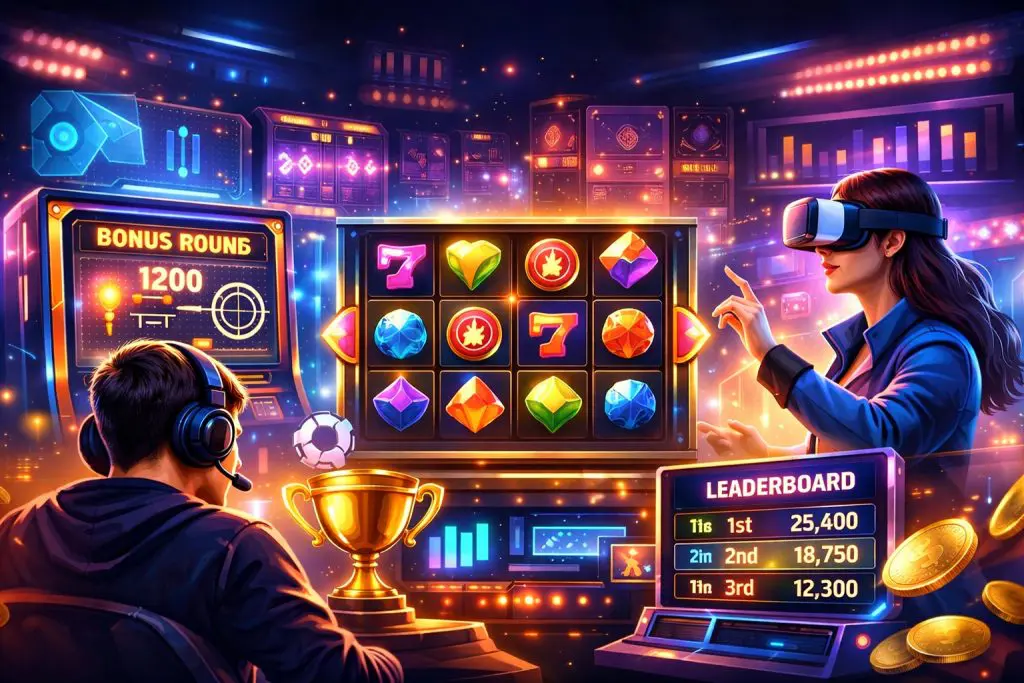
Transparency is essential. To prove fairness in skill models, provably fair games must be clearly documented as to how Random Number Generation (RNG) interacts with player input. Third party testing laboratories are adjusting to test hybrid systems.
Some practices are evolving to allow third party testing labs to verify how skill-based games operate fairly. One such practice is for the game operator to publish simple payout diagrams that illustrate how player choices affect the expected value range for each possible player decision path. Another evolving practice is for operators to provide analytical data to players showing how their performance in mini-games relates to the amount of money they win over time.
Building trust takes time. A major controversy in the skill based slot market could slow down the entire development of the sector for many years.
What We May See After 2026
The idea of combining esports and slot machine style gaming is no longer something people are speculating about. There are now industry panel discussions about cross-over events featuring slot competitions in addition to other esports tournaments.
To give you an example of a cross-over event: Imagine a weekend long event in which slot competition winners were determined through timed hybrid slot machine gaming sessions. Player performance in bonus mini-games was used to determine the winner’s position on a leaderboard. Players with the top scores would move on to participate in a live final round.
It is certainly within the realm of possibility. The technology necessary to support this kind of event already exists.
Another new space is virtual reality casino environments where avatars come together to play on interactive slot machines. Social gaming and betting could be merged using shared virtual environments and leader boards, allowing the community to view the performance of individuals and teams competing for progressive skill-based jackpots that reward large groups of players and cause celebrations in the virtual environment when triggered.
There are also opportunities for cross-platform progressions. For example, a player may practice a skill based mini-game mechanic in a free-to-play mobile environment and later apply those refined skills to a real-money version of the same mechanic.
Not everything will be successful.
While there is a growing desire for interactive slot machines, there is also a fear that the complexity of a product offering skill, as opposed to simply relying on randomness, could alienate the existing customer base.
I believe the future of skill-based slot games will settle into a hybrid model. Classic slot games driven purely by random number generation will continue to dominate the market. At the same time, a growing segment of the market will consist of interactive slot machines catering to players who desire to have an influence on the outcome of a game.
If I had to identify the key drivers of this next phase, they would be:
Demand from younger players familiar with esports who wish to make decisions in a game;
Advances in technology that enable mini-games that adapt to player performance and immersive overlay graphics;
Pressure from competitors such as Hacksaw Gaming, Playtech, and other similar companies to develop differentiated products;
Evolution of regulations that clarify the classification of skill-based elements;
Data-driven refinement of engagement and retention through the use of skill;
None of the above factors will guarantee success individually. Collectively, they provide momentum.
Skill-based slot games are no longer merely an experiment. They are a blend of chance and decision-making inside one of the oldest forms of gaming on the planet.
The unknowns about the future of skill-based slots are not about substituting reels with reflex tests. Rather, the unknowns are about adding options to chance in a way that feels fair, open, and exciting.
If developers understand the math behind their games, if regulators provide clear guidance, and if players enjoy the experience of making decisions in a game, the casino floor in 2026 and beyond will be very different. The lights will still flash. The reels will still spin. However, behind the scenes, decisions will count more than ever before.